
Sha’ul and Bar-Nabba’s First Missionary Journey ~ Part 3
We pick up the ongoing story of Sha’ul in Acts 13:23.
Note: To examine the graphics in this series, just click on them for a pop-up version.

Sha’ul’s Sermon in Pisidian Antioch ~ Part 2
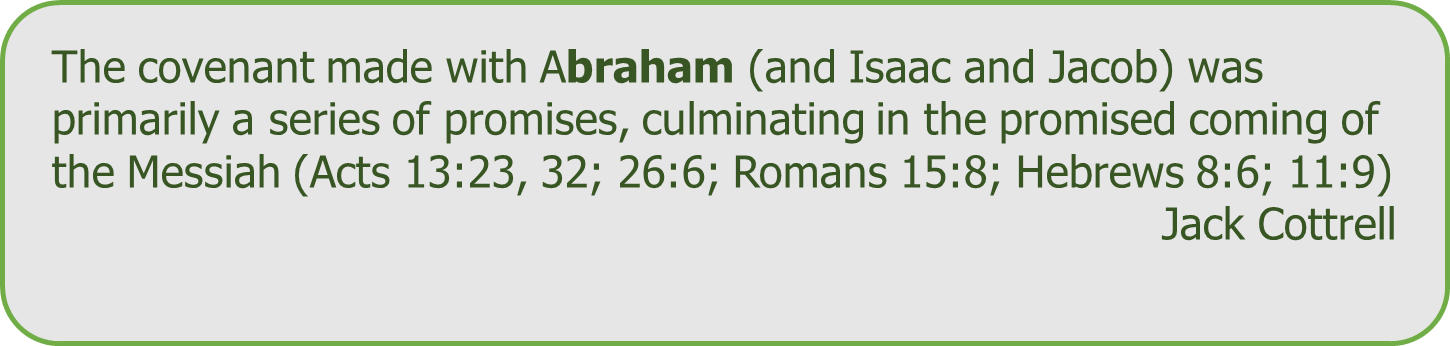
23 “In keeping with His promise, God has brought to Isra’el from this man’s descendants a deliverer, Yeshua.
The Greek word used for descendants is Sperma. It not only refers to the offspring of King David but relates to the Davidic Covenant (2 Samuel 7:12) and God’s promises to Avraham (Genesis 22:18–19). By using the word in this context, Sha’ul proclaims that God has fulfilled His promises through Yeshua.
24 Now, before the coming of Yeshua, Yochanan the Immerser proclaimed to all the people of Isra’el an immersion in connection with turning to God from sin. 25 But as Yochanan was ending his work, he said, ‘Who do you suppose I am? Well – I’m not! But after me is coming someone, the sandals of whose feet I am unworthy to untie.’
The precise question is not found in the Gospel records of Yochanan the Immerser’s ministry, but the substance of the answer is implied in Mattityahu 3:11; Yochanan 1:20, 21. [1]
26 “Brothers! – sons of Avraham and those among you who are ‘God-fearers’! It is to us that the message of this deliverance has been sent! 27 For the people living in Yerushalayim and their leaders did not recognize who Yeshua was or understand the message of the Prophets read every Shabbat, so they fulfilled that message by condemning Him.
For the people living in Yerushalayim… The implied reason for the mission to the Gentiles and more distant Jews is that the offer of salvation had been rejected by those who would naturally have been its first recipients and who had they received it, would have been, in their turn, witnesses to those that were “far off,” in both the local and spiritual sense of those words.
The message of the prophets was read every Sabbath day. The Emissary appeals to the synagogue ritual from which the discourse started, as in itself bearing witness, not to the popular notions of a conquering Messiah, but to the true ideal of the chief of sufferers, which had been realized in Yeshua. [2]
28 They could not find any legitimate ground for a death sentence; nevertheless, they asked Pilate to have Him executed; 29 and when they had carried out all the things written about Him, He was taken down from the stake and placed in a tomb.
Technically, the Sanhedrin had condemned the Lord on the charge of blasphemy (Mattityahu 26:66), but they had been unable to prove the charge by any adequate evidence (Mattityahu 26:60) and finally condemned Him by extorting words from His own lips.
When they had carried all that was written of Him… The words are suggestive of much that lies below the surface. Sha’ul had studied in the same school of prophetic interpretation as the writers of the Gospels and saw as they did, in all the details of the Crucifixion, the fulfillment of that which had been written beforehand, it might be, of other sufferers, but which was to find its highest fulfillment in the Yeshua.
30 “But God raised Him from the dead! 31 He appeared for many days to those who had come up with Him from the Galil to Yerushalayim, and they are now His witnesses to the people. 32 “As for us, we are bringing you the Good News that what God promised to the fathers, 33 He has fulfilled for us the children in raising up Yeshua, as indeed it is written in the second Psalm,
‘You are my Son;
today I have become your Father.’ (Psalm 2:7)
34 And as for His raising Him up from the dead, to return to decay no more, He said,
‘I will give the holy and trustworthy things of David to you.’ (Isaiah 55:3)
Raising up Yeshua from death is explicitly meant in verse 34 but not in verse 33. What is meant is raising up Yeshua to prominence. This took place at His immersion by Yochanan, when the voice from Heaven also quoted Psalm 2:7, “You are my Son” (Lk 3:22), and Yeshua began His public ministry as Savior of the world. [3]
35 This is explained elsewhere:
‘You will not let your Holy One see decay.’ (Psalm 16:10)
36 For David did indeed serve God’s purposes in his own generation, but after that, he died, was buried with his fathers, and did see decay. 37 However, the one God raised up did not see decay.
38 “Therefore, brothers, let it be known to you that through this man is proclaimed forgiveness of sins! 39 That is, God clears everyone who puts his trust in this man, even in regard to all the things concerning which you could not be cleared by the Torah of Moshe.
40 “Watch out, then, so that this word found in the Prophets may not happen to you:
41 ‘You mockers! Look, and marvel, and die!
For in your own time, I am doing a work
that you simply will not believe,
even if someone explains it to you!’” [4]
In our next post, Sha’ul and Bar-Nabba continue their First Missionary Journey.
Sha’ul of Tarsus – His Letters -Part 8
[1] E. H. Plumptre, “The Acts of the Apostles,” in A Bible Commentary for English Readers.
[2] Ibid.
[3] David H. Stern, Jewish New Testament Commentary.
[4] Acts 13:23–41.
 My Heart Is For Israel