
Sha’ul’s Second Missionary Journey ~ Part 7
Note: To examine the graphics in this series, click on them for a pop-up version.
We continue our ongoing story of Sha’ul’s Second Missionary Journey beginning in Acts 16:35.
Sha’ul & Sila Released from Prison
35 The next morning, the judges sent police officers with the order, “Release those men.” 36 The jailer told Sha’ul, “The judges have sent word to release both of you. So come out and go on your way in peace.”
At dawn, the Judges ordered that Sha’ul and Sila be released. Some scholars claim verse 35 would be a suitable continuation of verse 24 [1] and that this and other “jailbreak” episodes are part of a body of mythical literature in which God rules over natural phenomena on behalf of His people. Hence, they claim verses 25–34 are fictional additions. Among several problems with this conclusion are the following: First, it is possible that the Judges ordered Sha’ul and Sila released because they realized that they had overreacted in jailing them in the first place. Second, it is very likely that the Judges experienced the earthquake and were told about the events at the jail, thus prompting them to fear God’s judgment.[2]
37 But Sha’ul said to the officers, “After flogging us in public when we hadn’t been convicted of any crime and are Roman citizens, they threw us in prison. Now they want to get rid of us secretly? Oh, no! Let them come and escort us out themselves!”
Sha’ul knew the laws regulating the punishment of Roman citizens. Having been illegally beaten and denied trial, he refused to be released and pretended nothing had happened. Sha’ul’s Roman citizenship is mentioned here for the first time in Acts (see Acts 22:25–29; 23:27; 25:11). Roman citizens were exempt from certain kinds of punishment (e.g., crucifixion) and were entitled to due process before punishment. (I may be showing my lack of remembering my civics lessons in high school, but I found it interesting that Rome practices “due process.”) The question arises as to how Sha’ul would have proven his citizenship. There probably was a register in Tarsus that recorded his citizenship. Still, citizens also often carried small wooden tablets (some of which have been found), like a modern passport, that they used to prove their citizenship. Perhaps Sha’ul carried such a document. [3]
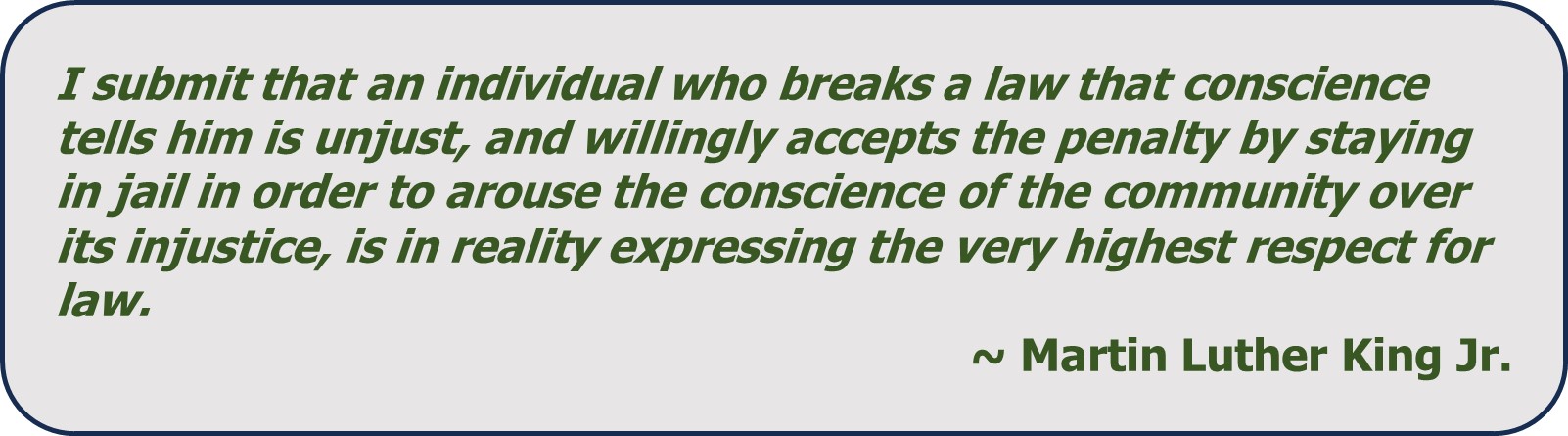
38 The officers reported these words to the judges, who became frightened when they heard that Sha’ul and Sila were Roman citizens. 39 They came and apologized to them; then, after escorting them out, requested them to leave the city. 40 From the prison, they went to Lydia’s house, and after seeing and encouraging the brothers, they departed. [4]
The fear of the judges is understandable. Philippi was a Roman colony that followed Roman law. Many people in the town would have known about the rights of a Roman citizen. Though not obligated to do so, Sha’ul and Sila counted the apology as amends for the wrongs they had suffered. It is often best for the Believer to forego demanding full justice.
In our next post, we will continue to explore Shaul’s Second Missionary Journey; we will follow Sha’ul and Sila on their journey through Macedonia, starting in chapter 17:1.
Click here for the PDF version.
[1] 24 Upon receiving such an order, he threw them into the inner cell and clamped their feet securely between heavy blocks of wood.
[2] Stanley E. Porter, “Acts,” in Holman Illustrated Bible Commentary, ed. E. Ray Clendenen and Jeremy Royal Howard (Broadman & Holman, 2015), 1188.
[3] Ibid.
[4] Acts 16:35–40.
 My Heart Is For Israel