Romans ~ Part 19
Note: To examine the graphics in this series, click on them for a pop-up version.
As I’ve stressed in my previous post, our journey to comprehend the profound significance of Sha’ul’s Letter to the Romans is not just a study but a crucial cornerstone of our faith.
Freedom from the Law ~ Part 2
If you struggle with sin daily, as Sha’ul describes in Romans 7, try keeping a sin journal. At the end of each day, write down moments where you felt tempted or failed. Reflect on these entries weekly. This practice can help you identify patterns in your struggles and remind you of God’s grace. Celebrate small victories over sin and invite a trusted friend to pray with you about these issues, reinforcing accountability and support in your Messianic walk.
Law Did Not Cause Sin
13 Then did something good become for me the source of death? Heaven forbid! Rather, it was sin working death in me through something good, so that sin might be clearly exposed as sin, so that sin through the commandment might come to be experienced as sinful beyond measure.
Did the good law cause death? The correct understanding is that sin used something good to bring human death. God used the law to accomplish His purpose, clarifying and overcoming sin.
14 For we know that the Torah is of the Spirit; but as for me, I am bound to the old nature, sold to sin as a slave.
Verses 14-25 are probably the most challenging and controversial passages in the letter to the Romans. For the most part, the Eastern Church has interpreted it as referring to an unregenerate person (e.g., Sha’ul before his conversion). The Western Church followed Augustine, Luther, and Calvin in thinking it refers to a regenerated person (Sha’ul after his conversion). Some suggest a mediating position. One such view interprets the subject as a Tanakh Believer who loves the law (Psalm 1; 119) but struggles to perform it. Living before Yeshua and Pentecost, this person does not have the permanent and empowering gift of the Holy Spirit, as do new covenant Believers. Another view holds that the subject is almost converted to Yeshua and is now under conviction of sin by the law.
The view that the subject of 14–25 is a regenerate person is sometimes modified in the following ways: (1) The subject is saved but has not had “baptism” in the Pentecostal sense or a second work of grace (as held in some types of Wesleyan theology). (2) The subject is an immature Believer, not yet equipped for warfare with his fleshly desires. (3) The subject is a Believer trying to become sanctified by legalism.
The view outlined here assumes that the subject is a regenerated Believer, most obviously Sha’ul himself but generically every Believer. Sha’ul describes the new man in relation to the law of God and looks at only one aspect of the person. The new man will be considered in relation to the Holy Spirit in the next section, where the Holy Spirit is mentioned 21 times. The main reason for the position offered here is to consider this man’s problem. In verse 14, he is said to be made out of flesh. As a Believer in Yeshua, Sha’ul longed to be delivered from the fallen human body, which still has indwelling sin.
Law Is Good; Man Is Sinful
15 I don’t understand my own behavior—I don’t do what I want to do; instead, I do the very thing I hate!
The law is from God and, therefore, spiritual. Still, Sha’ul is made out of flesh (a symbolic reference to spiritual fallenness) and thus finds himself conflicted with the heavenly law of God.
16 Now if I am doing what I don’t want to do, I am agreeing that the Torah is good. 17 But now it is no longer “the real me” doing it, but the sin housed inside me.
Sha’ul agreed with the law and its goodness, but sin is an alien power that has residence within him and causes him to do things he hates.
18 For I know that there is nothing good housed inside me—that is, inside my old nature. I can want what is good, but I can’t do it! 19 For I don’t do the good I want; instead, the evil that I don’t want is what I do!
Even after conversion, no part of a person is sinless, no place without sin’s presence, and the Believer cannot keep the whole law. The only good in a Believer is the presence of the Holy Spirit.
20 But if I am doing what “the real me” doesn’t want, it is no longer “the real me” doing it but the sin housed inside me.
In his inner self, in his deepest recesses, the Believer delights in God’s law, but he finds this alien power living within, waging war with him and taking him prisoner to the law of sin.
Flesh and Spirit Struggle
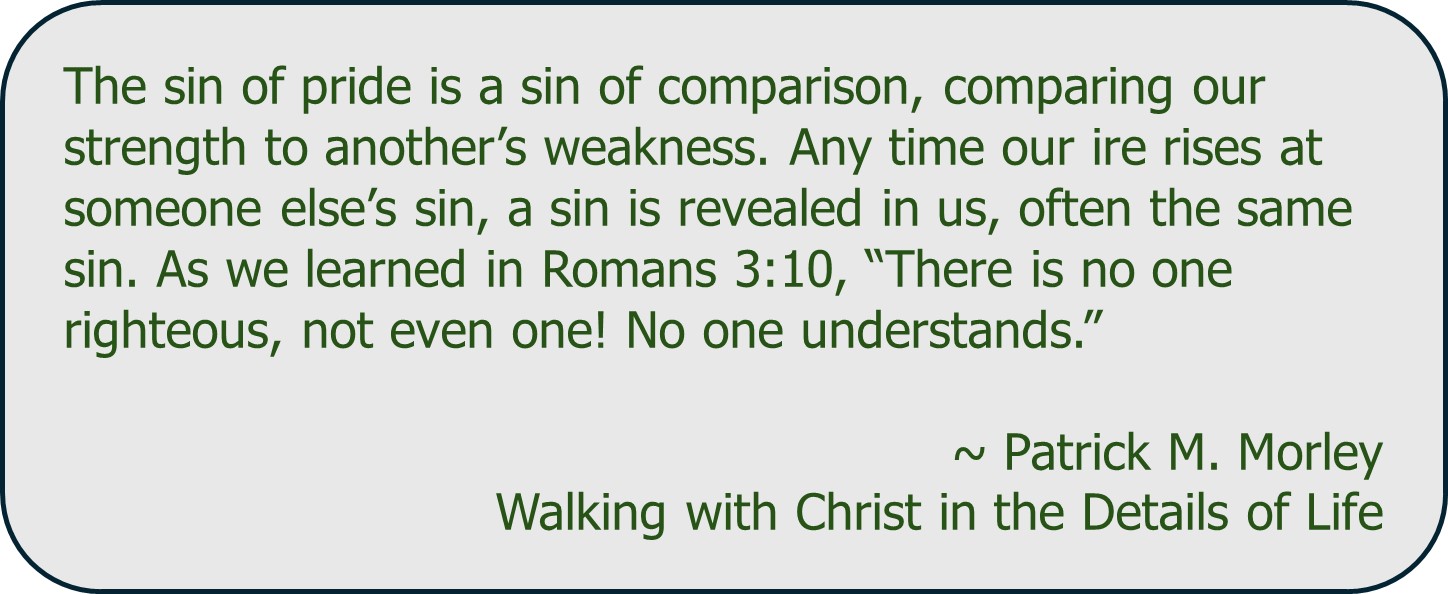
21 So I find it to be the rule, a kind of perverse “Torah,” that although I want to do what is good, evil is right there with me! 22 For in my inner self I completely agree with God’s Torah; 23 but in my various parts, I see a different “Torah,” one that battles with the Torah in my mind and makes me a prisoner of sin’s “Torah,” which is operating in my various parts. 24 What a miserable creature I am! Who will rescue me from this body bound for death? 25 Thanks be to God [, he will]!—through Yeshua the Messiah, our Lord! To sum up, in my mind, I am a slave of God’s Torah, but with my old nature, I am a slave of sin’s “Torah.” [1]
Many modern commentators and translators try to reorder these verses, but the order makes sense if the above interpretation is followed. In verse 24, the subject cries out for deliverance from the fallen human condition. A cry of thanksgiving is then offered to God because the subject knows that Yeshua will deliver him from his body. The Believer recognizes that in his mind, he wants to serve God’s law since it is holy, just, good, and spiritual, but at the same time, his fallen nature is in the service of this alien power—sin.
In our next post, we begin to examine the theme: Freedom from Death.
Click here for the PDF version
[1] Romans 7:13–25.
 My Heart Is For Israel
Excellent, Don. I’ve been waiting for this one. I also believe it is applicable to every believer. It is a real battle, yet I also believe that God can and does deliver us for our sins, layer by layer, so that the hold that sin has on us is diminished and held in check. For myself, the key has been to want deliverance from a particular sin more than I wanted to stay in that sin and to understand what that sin does to my relationship with God and want the relationship more. The wonder of this experience is that deliverance does come! The hold of sin is diminished and ultimately weakened and removed in that area. It remains there in the background but it’s hold is broken, it’s draw overcome. I believe this is part of the sanctification process of all believers who earnestly seek communion with God. I also know that I am grateful because there is joy in the freedom found. This process is especially relevant to the major sins such as adultery, porn, drugs, booze etc, because these sins can cripple us very quickly. God’s indwelling Holy Spirit is stronger than the sin we are subject to and it is brought about by Jesus and the accompanying grace of His Holy Spirit. Layer by layer is another key because I don’t think we comprehend the depth of sin, nor it’s consequences initially. It involves awareness, layer by layer and earnestly seeking deliverance from God. Even yet, while we are in these bodies, it still is in part. Wholeness comes when we see God face to face. All I know is that I am very grateful for the deliverance that I have so far experienced. This is a difficult topic to put into words. Blessings, brother.
LikeLiked by 2 people
As usual, Bruce, your comments are greatly appreciated. I have been looking forward for some time to dig into Romans and this series allowing me to do that. Can you send me your email address for a more private discussion. Mine is rabbibuba99@gmail.com.
Don
LikeLiked by 2 people
Oops rabibubba99@gmail.com
LikeLiked by 1 person
Done!
LikeLiked by 1 person
I need to clean my glasses. It’s rabbibubba99@gmail.com
LikeLiked by 1 person