
Colossians ~ Part 5
Note: To examine the graphics in this series, click on them for a pop-up version.
Carnality and Spirituality ~ Part 2
Doctrines That Are Man-Made Rules
20 If, along with the Messiah, you died to the elemental spirits of the world, then why, as if you still belonged to the world, are you letting yourselves be bothered by its rules? —
Elemental spirits. The same expression is used in Colossians 2:8 and Galatians 4:3, 9; all three verses, like this one, have as their context Gentile observance of Jewish practices.
21 “Don’t touch this!” “Don’t eat that!” “Don’t handle the other!” 22 Such prohibitions are concerned with things meant to perish by being used [not by being avoided!], and they are based on man-made rules and teachings (Isaiah 29:13).
Things meant to perish by being used [not by being avoided!]. The phrase in brackets makes explicit Sha’ul’s otherwise somewhat elliptical point; the brackets show that these words are not part of the Greek text.
23 They do indeed have the outward appearance of wisdom, with their self-imposed religious observances, false humility, and asceticism, but they have no value at all in restraining people from indulging their old nature.
Paul conceded that these regulations had a reputation of wisdom in that they appeared to provide enlightened spiritual understanding (1:9), but in reality, these practices offered no help in dealing with self-indulgence. The term for “self-indulgence” or gratification may play on the word “fullness.” This false philosophy promised a fullness of wisdom through severe asceticism, but it failed to achieve its intended goal.
To Be Spiritually Minded
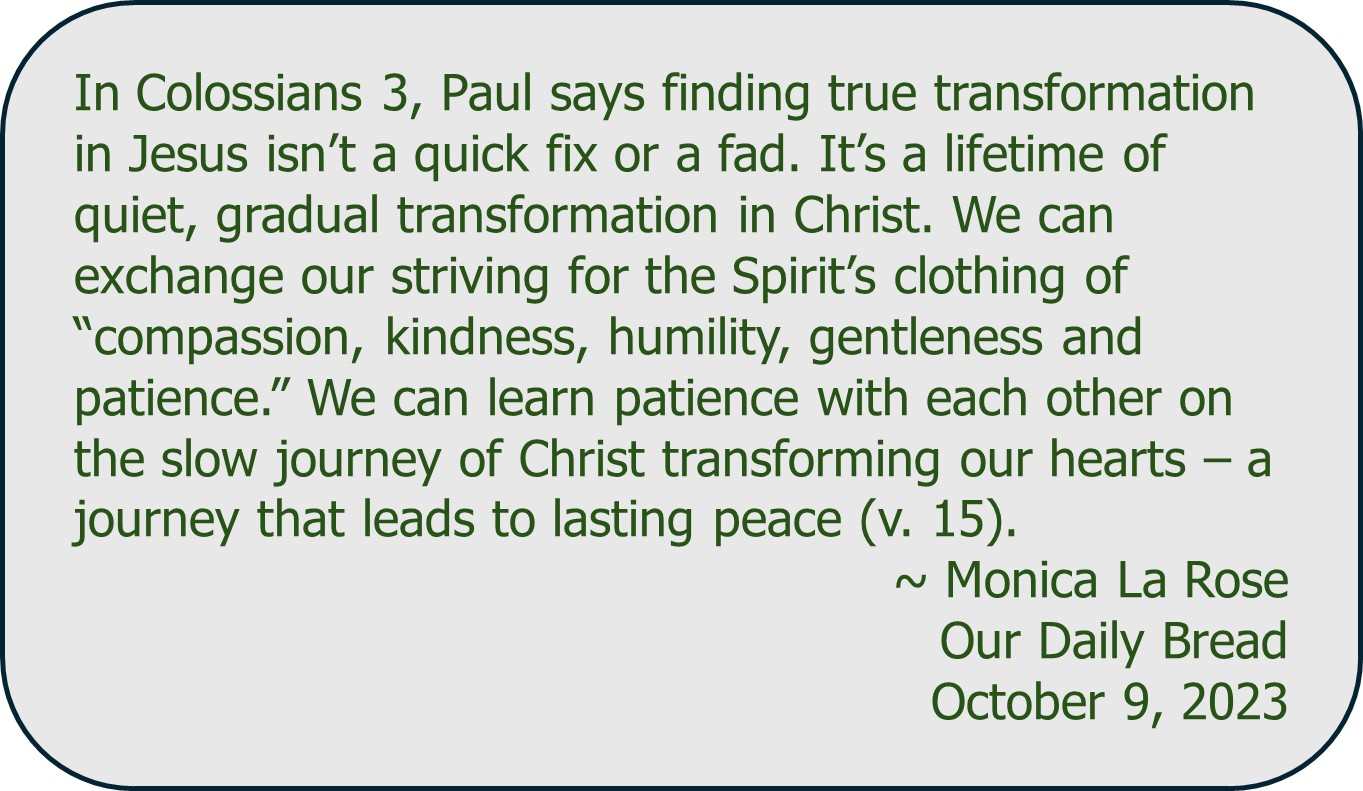
3 1 So if you were raised along with the Messiah, then seek the things above, where the Messiah is sitting at the right hand of God (Psalm 110:1).2 Focus your minds on the things above, not on things here on earth. 3 For you have died, and your life is hidden with the Messiah in God. 4 When the Messiah, who is our life, appears, then you too will appear with him in glory!
These verses resemble Yochanan 17:14–19; they counsel not otherworldliness and withdrawal but holiness in this world. They convey positively the same message as the negative warning of Colossians 2:16–23.
Lives to Be Transformed
5 Therefore, put to death the earthly parts of your nature—sexual immorality, impurity, lust, evil desires and greed (which is a form of idolatry); 6 for it is because of these things that God’s anger is coming on those who disobey him. 7 True enough, you used to practice these things in the life you once lived; 8 but now, put them all away—anger, exasperation, meanness, slander and obscene talk. 9 Never lie to one another; because you have stripped away the old self, with its ways,
With vv. 5-9, Sha’ul turns from theory to practice, as in many of his letters. For other lists of sins, see Romans 1:29–31, 1 Corinthians 6:9–10, and Galatians 5:19–21.
10 and have put on the new self, which is continually being renewed in fuller and fuller knowledge, closer and closer to the image of its Creator.
Put on the new self, as at Ephesians 4:24; compare 2 Corinthians 5:17, Galatians 6:15. Fuller and fuller knowledge. Part of Sha’ul’s anti-Gnostic polemic; see Colossians 1:19, 2:2–3. The image of its Creator, see Colossians 1:15.
11 The new self allows no room for discriminating between Gentile and Jew, circumcised and uncircumcised, foreigner, savage, slave, free man; on the contrary, in all, the Messiah is everything. [1]
David Stern opines that a literal translation of vv. 10b–11is: … being renewed into full knowledge according to the image of the one creating him, where Greek and Jew, circumcision and uncircumcision, barbarian, Scythian, slave, freeman have no place; rather Messiah is all things and in all. [2]
In our next post, we examine Sha’ul’s Letters to the Saints, continuing in Colossians.
[1] Colossians 2:20-3:11.
[2] David H. Stern, Jewish New Testament Commentary, Colossians 3:11.
 My Heart Is For Israel