
Ephesians – Part 7
Note: To examine the graphics in this series, click on them for a pop-up version.
Exhortation Regarding Personal Righteousness ~ Part 1
While navigating public life, you may often feel overwhelmed by negativity and divisions in society. Ephesians 4:24 talks about putting on the new self, which reflects God’s righteousness. This week, in any public conversation, whether online or in person, make a conscious choice to contribute positivity. Whether it’s sharing an uplifting article, promoting acts of kindness, or simply listening actively to someone with a different viewpoint, let these acts be a light that represents Yeshua’s love and peace amidst the societal chaos.
Renounce Sensuality
This passage (vv. 17-19) is what leads to immorality and amorality (e.g., deceptive desires, v. 22), and instruction in how to achieve proper morality.
17 Therefore, I say this—indeed, in union with the Lord I insist on it: do not live any longer as the pagans live, with their sterile ways of thinking.
The conventional wisdom of our century is at odds with the Scriptures because it fails to see that resisting God’s will suppresses intelligence and fosters ignorance.
18 Their intelligence has been shrouded in darkness, and they are estranged from the life of God, because of the ignorance in them, which in turn comes from resisting God’s will. 19 They have lost all feeling, so they have abandoned themselves to sensuality, practicing any kind of impurity and always greedy for more.
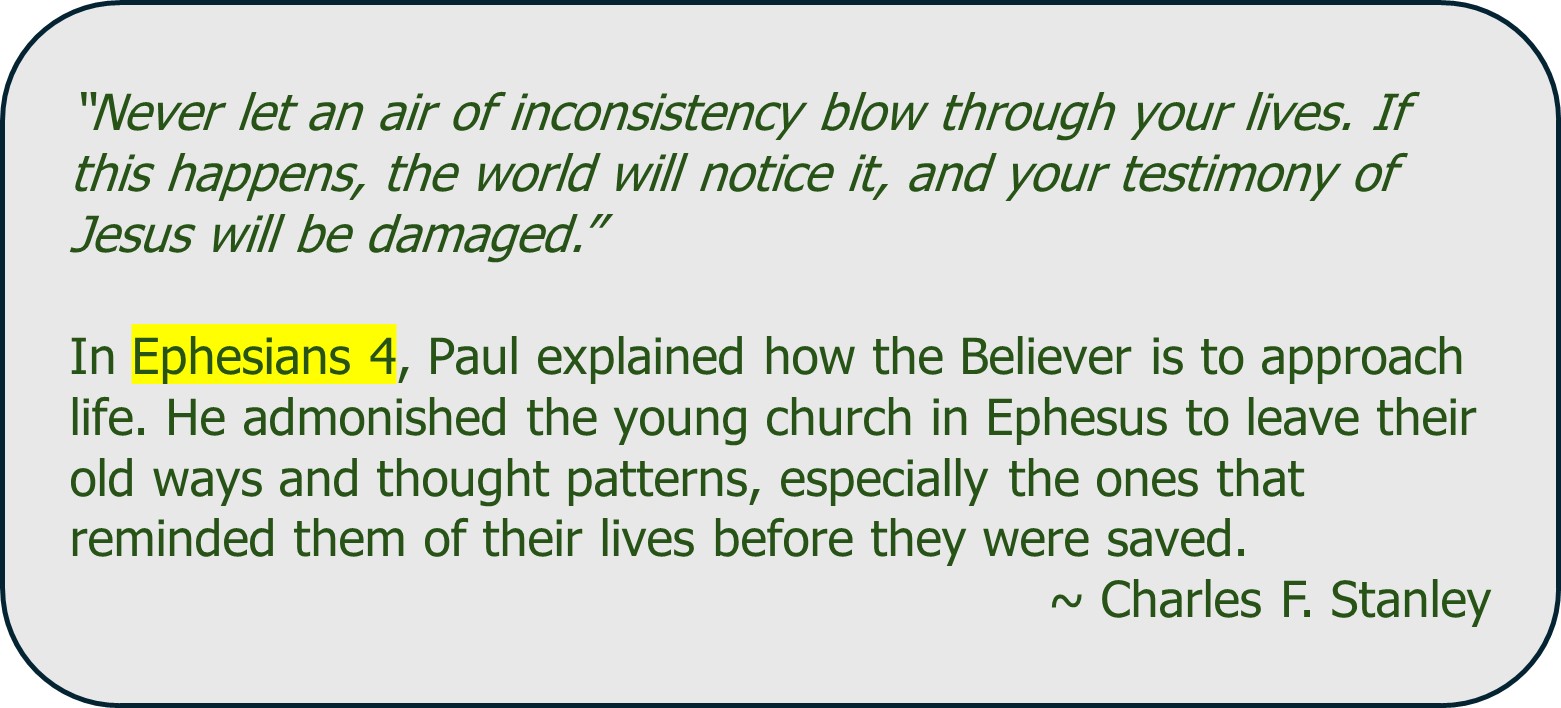
This section of the letter provides the practical outworking of verse 4:1. Sha’ul’s exhortations denounced the readers’ former way of life. The content of the exhortation clearly parallels early Messianic baptismal practices of putting off old clothes before putting on new clothes to enter the baptismal waters. The picture is similar to one in Colossians 3:5–11, except that the Colossians passage contrasts heavenly and earthly life. The Ephesians passage contrasts a person’s former lifestyle with the new life in Yeshua.
Renew Holiness
20 But this is not the lesson you learned from the Messiah! 21 If you really listened to him and were instructed about him, then you learned that since what is in Yeshua is truth,
Sha’ul pictures the truth totally in terms of the Messiah, who is the way, the truth, and the life.
22 then, so far as your former way of life is concerned, you must strip off your old nature, because your old nature is thoroughly rotted by its deceptive desires; 23 and you must let your spirits and minds keep being renewed, 24 and clothe yourselves with the new nature created to be godly, which expresses itself in the righteousness and holiness that flow from the truth.
Sha’ul often describes who Believers already are, while also pointing to what they should strive to become. The practical paradox is that while freedom from sin’s eternal penalty is already ours, freedom from the former way of life (a life of sin) comes only through our daily quest for obedience and purity. These are lifestyle commitments that every believer is called to make.
Discard Unrighteousness
25 Therefore, stripping off falsehood, let everyone speak truth with his neighbor, (Zechariah 8:16) because we are intimately related to each other as parts of a body. 26 Be angry, but don’t sin (Psalm 4:5(4))—don’t let the sun go down before you have dealt with the cause of your anger;
John MacArthur opines that: Faithfulness to Yeshua sometimes demands that we exercise a righteous anger. Many of the current cultural trends, the surges of violence and grossly dishonest and immoral practices, and the unbiblical ideas promoted even within supposedly evangelical circles need to be opposed by righteous anger. That’s because such things undermine the Kingdom and glory of God. The psalmist wrote, “God is a righteous judge, and a God who has indignation every day.” – (Psalm 7:11) [1]
27 otherwise you leave room for the Adversary. 28 The thief must stop stealing; instead, he should make an honest living by his own efforts. This way, he will be able to share with those in need.
29 Let no harmful language come from your mouth, only good words that are helpful in meeting the need, words that will benefit those who hear them. 30 Don’t cause grief to God’s Ruach HaKodesh, for he has stamped you as his property until the day of final redemption. 31 Get rid of all bitterness, rage, anger, violent assertiveness and slander, along with all spitefulness. 32 Instead, be kind to each other, tenderhearted, and forgive each other, just as in the Messiah God has also forgiven you. [2]
Sha’ul offered five examples of what living the new life means in the context of relationships with others. All of the examples include a negative command, a positive command, and a spiritual principle on which the commands are based. At the base of all of Sha’ul’s commands is a God-centered spiritual foundation.
In our next post, we continue to examine Sha’ul’s Letter to the Ephesians.
Click here for the PDF version.
[1] “Daily Readings from the Life of Christ”, Volume 1, April 14th.
[2] Ephesians 4:17–32.
 My Heart Is For Israel